
While the Prime Minister did not spell out the details of the three instances, his remarks are being widely interpreted as a reference to the 2016 surgical strikes following the Uri terror attack, the 2019 Balakot air strikes after the Pulwama bombing, and the recent cross-border strikes as part of 'Operation Sindoor'.

The Border Security Force (BSF) remains on high alert along the International Border (IB) and has not let its guard down, BSF Inspector General, Jammu Frontier, Shashank Anand said on Tuesday. Operation Sindoor, aimed at preventing infiltration attempts, continues as Pakistan cannot be trusted, he added. Anand highlighted the BSF's robust response after the April 22 Pahalgam terror attack, including destroying multiple terror launch pads and thwarting infiltration attempts.
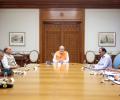
'The government has to explain (to the army, air force and navy chiefs) whether they want a punitive strike, a deep punitive strike, or whether they want limited war or an all-out war, will it be a circumscribed war or will it be a shallow attack along the border.'

Lt Gen Ghai said as for the process of documenting these weapons and informing those who need to know about them, "that is definitely continuing, and I can definitely authenticate that".

Sri Lankan players currently touring Pakistan for a three-match ODI series want to return home due to security concerns following a deadly suicide attack in Islamabad but PCB chief Mohsin Naqvi claimed that the rubber will continue, albeit with a rejigged schedule.
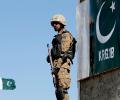
Ceasefire violations are still taking place in Uri and Rajouri sectors, Army sources said.
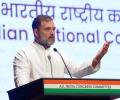
The Bharatiya Janata Party on Wednesday slammed Rahul Gandhi for his 'surrender' barb at Prime Minister Narendra Modi, saying it is not only a grave insult to the armed forces and country but also no less than treason.

Rahul Gandhi accuses PM Modi of prioritizing his image over national security after the Pahalgam attack, challenging him to refute Trump's claims of brokering a ceasefire between India and Pakistan.

On Wednesday, October 27, 2021, the Indian Army and Indian Air Force recreated dramatic scenes from the first India-Pakistan war in Kashmir by enacting the landing of the first Indian soldiers who repulsed the Pakistani attack in 1947.

'Nor would it have serious implications in India's relations with Saudi Arabia that stand on their own and have improved significantly in recent times, including in defence and strategic affairs.'
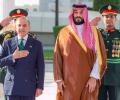
'Saudi-Pak defence pact is to anchor the defence and security of Saudi Arabia and not Pakistan, per se, with Islamabad being the junior partner.'
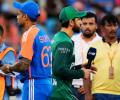
'On the very day the soldiers were dying for our country, we were playing the World Cup in England against Pakistan. We were shaking their hands even then because the spirit of the game is a different spirit from what goes on between countries, between Armies and so on.'
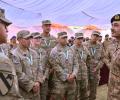
'Trump's sons, and the son of Trump's Mideast envoy Steven Witkoff, are in the crypto business and recently signed deals with Pakistan's crypto council.' 'It may not be coincidental that not long before the Trump-Munir meeting, the head of Pakistan's crypto council met with Trump's White House crypto policy czar.'

'The lesson Beijing would have learned is that there is, cost-benefit wise, no better option than to keep the Pakistan military supplied with its most advanced armaments, certain that in hostilities with India these would be used for maximum effect.'
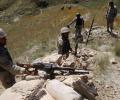
Afghan Taliban forces fired on multiple Pakistani border posts in the Upper Kurram district, killing one Frontier Constabulary (FC) soldier and injuring 11 others. The incident came after Pakistan targeted terrorist positions in Afghanistan to punish the banned Tehreek-e-Taliban (TTP) militants. Pakistani forces retaliated, inflicting heavy casualties on the Afghan side.
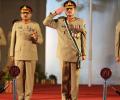
The launch of the first-ever direct train service from Delhi to Kashmir would be a big turning point in the Valley's mood and its integration with India. He had to thwart it at any cost, asserts Shekhar Gupta.

Congress leader Rahul Gandhi visited Poonch in Jammu and Kashmir, offering condolences to families affected by cross-border shelling and encouraging students who lost two classmates to the violence. During an hour-long visit, Gandhi met with students at the convent school that lost the twins, and visited families whose homes were damaged in the shelling.
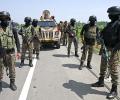
India needs to be technologically and militarily prepared to defend itself from both Pakistan and China, alerts Ramesh Menon.

Suryakumar fined 30 percent of match fee, India appeal verdict
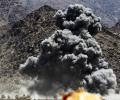
A series of Pakistani airstrikes in Afghanistan's Barmal district of Paktika province has resulted in the death of 46 people, with six people left injured so far, with the majority of victims being women and children, as reported by Khaama Press, citing reports from Taliban authorities.
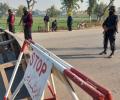
At least 12 persons, including four children, were killed and 30 injured as two explosive-laden vehicles rammed into the boundary wall of the main cantonment in Bannu in northwest Pakistan on Tuesday while the army personnel neutralised at least six terrorists.
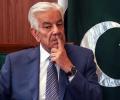
The entry of other Arab countries in the mutual defence deal between Pakistan and Saudi Arabia is not ruled out, Defence Minister Khawaja Asif has said, adding that 'doors are not closed' for such developments.
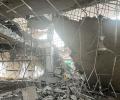
'India won't take anything from Pakistan lying down.'
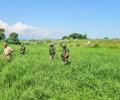
'Why have we failed to address the issue of ensuring a requisite buffer zone in J&K, given that cross-border links of some J&K politicians are known?', asks Lieutenant General Prakash Katoch (retd).
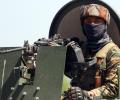
The real heroes of Operation Sindoor were not the armed forces or political leadership, but the ordinary citizens of India who refused to fall into the trap of communal provocation, asserts Colonel Anil A Athale (retd).
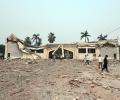
'Operation Sindoor had three objectives.' 'One, destroy the Lashkar-e-Taiba headquarters at Muridke and the Jaish-e-Mohammed headquarters at Bahawalpur.' 'Second, deter and defend any counterstrike by Pakistan.' 'And third, if they persist, demonstrably deliver counterforce punishment.' 'All of the three boxes, the IAF checked,' points out Shekhar Gupta.

Jaishankar said that the Pahalgam attack "was an act of economic warfare. It was meant to destroy tourism in Kashmir, which was the mainstay of the economy. It was also meant to provoke religious violence because people were asked to identify their faith before they were killed."
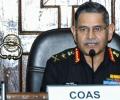
Indian army chief General Upendra Dwivedi on Saturday said that the surgical strikes carried out during Operation Sindoor were a clear message to Pakistan that supporters of terrorism will not be spared.
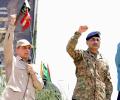
The meeting, expected on September 25 on the sidelines of the UN General Assembly, will also be attended by army chief Field Marshal Asim Munir.
Pakistan and Afghanistan have agreed to an immediate ceasefire and setting up of 'mechanisms' to ensure lasting peace after days of violent clashes along the border that left several soldiers, civilians, and terrorists dead on both sides, officials said on Sunday.

'Imran Khan's rule was dismal. Despite this, he has become a cult figure.' 'He sold the dream of a Naya Pakistan to the people of Pakistan, especially the youth, and branded all other politicians as corrupt.' 'Hence, his popularity.'
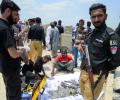
'This strike has certainly enhanced your image.' 'Otherwise, people would have called you a damp squib, capable of doing nothing except talking big.'

'If they aim to remain aligned with the public sentiment, as any democratic government should, then they must respond. Why else would the prime minister have cut short his visit to Saudi Arabia? And why would he have instructed the home minister himself to travel to Srinagar to assess the situation firsthand? This suggests that something is indeed being planned. I am quite certain of that, although the exact form it will take remains to be seen.'
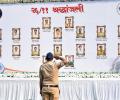
'They came to our bedrooms, woke people who were sleeping, and shot them. For what? For what?'
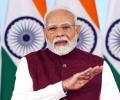
Presenting the full text of Prime Minister Narendra Modi's address to the nation on May 12, 2025, in which he dictated India's new doctrines on countering terrorism.
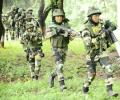
Among the medal winners are a deputy commandant rank officer, two assistant commandants and an inspector.
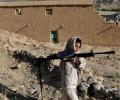
Following Pakistani airstrikes in Afghanistan's Barmal district of Paktika province, which left 46 dead and six injured, the Ministry of Foreign Affairs of Afghanistan on Wednesday summoned the Charge d'Affaires of the Pakistani Embassy in Kabul.
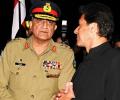
The meeting is being speculated to have revolved around the recent political developments in the country, with the local media reporting that the agenda of the meeting could have revolved around the upcoming Organisation of Islamic Countries (OIC) summit in Pakistan, the ongoing unrest in Balochistan and the upcoming no-confidence motion against Imran Khan.
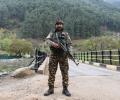
It is time we buried the mantra of 'peaceful and stable Pakistan is in our interest'. It is not, simply because Pakistan's existence -- that is synonymous with its army -- means peace has no chance, asserts Colonel Anil A Athale (Retd). It is time we buried the mantra of 'peaceful and stable Pakistan is in our interest' asserts Colonel Anil A Athale (Retd).
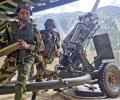
'Will this near-war, India's strongest military response so far, buy India another seven years of deterrence?' asks Shekhar Gupta.
